
We believe in the potential of creativity—combined with the many different ways of experiencing and perceiving the world—to transform our planet into a fairer place that is more tolerant of diversity. That is why we value our diverse backgrounds: we are a team drawn from different regions of the country, each with our own personal and professional journeys. But that’s not all: we are always open to learning about other ways of making sense of the world—beyond, far beyond our own.
We believe that audiovisual media and literature serve as bridges that allow us to frequently explore these possibilities of existence and, in this way, immerse ourselves in a wealth of life experiences so that we can creatively and collectively develop strategies to combat climate, political, and social challenges. For us, the solutions to these crises are collective and creative. 🤗
Taking the land as our starting point—the definitive foundation for all discussions (such as food, occupation, preservation, and culture) and, historically, a source of conflicts and wars—we have selected excerpts from literary works that may inspire us to rethink the way we view our relationship with the land—and to learn how other peoples interact with it and make sense of it.
Is it going to make your head spin? It will! But that's the power of stories: they never turn out the same, and neither do the characters in them.
Tell us: have you read any of them? What other books would you add to the list?
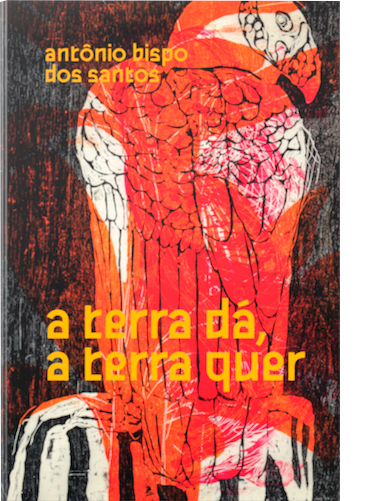
“Development and colonialism arrived by subjugating, attacking, and destroying. When development is introduced into spaces where people live through their engagement with their surroundings, when ways of life are attacked, when that engagement is stifled, rendered impossible, and weakened, there will be a reaction.” (p. 97)
The Land Gives, the Land Wants
Author: Antônio Bispo dos Santos (Mestre Nego Bispo)
Publisher: Ubu Editora/ PISEAGRAMA
Year: 2023
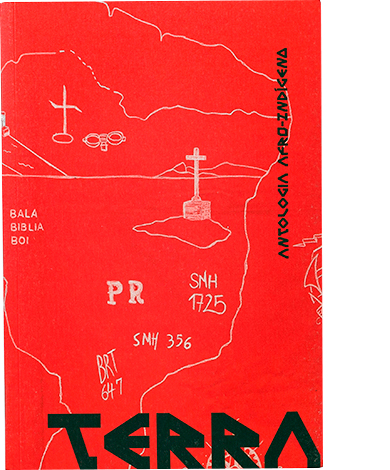
“One of the things I tell the elders and all of you, Juruá, when we meet, is that it would be important to conduct anthropological research on your culture. To bring a Guarani out of the village so he can stay in your homes and observe you every day. To feel, reflect, try to understand, write reports, and finally produce a beautiful hardcover thesis—with many pages, photographs, graphs, and references to other studies—only to conclude by telling the Juruá to become savages, to become uncivilized people—since all the bad things happening on planet Earth come from civilized people, people who, theoretically, are not savages. (…) I wonder, if I studied anthropology, would I be able to explain to my people why the Juruá do this? But, anyway, we can’t lose hope. We have to fight—we’ve been fighting for five hundred years.” (pp. 20–21) Becoming Wild, Jerá Guarani
“Today I’ve been labeled an artist, but the only thing I really know how to do is fight for my territory. We are people who dream within the territory, and the territory dreams along with us. If it feels threatened, if it feels attacked, it will speak to us, and everyone in the village will have the same dream. Like bees in a hive. If anything happens to one of us, everyone will be in tune. (…) The place of dreams connects us.” (p. 186) The Territory Dreams, Glicéria Tupinambá
Terra: Afro-Indigenous Anthology
Author: Various
Publisher: Ubu Editora/ PISEAGRAMA
Year: 2023
“I went with Davi Kopenawa to Athens. And the Brazilian Consulate in Athens assigned someone to accompany us on a tour of the Acropolis, Hadrian’s Arch, and the Temple of Zeus. We went to visit these places. When we arrived near the Aegean Sea, at a ruin with those broken columns, stones scattered everywhere, the remains of ancient temples lying on the ground, and a beautiful sea before our eyes—on a day with lovely light and sunshine—we stopped there, and our guide from the Brazilian consulate stayed with us, taking in the view. Then she asked me and Davi, “What did you think of this place? Did you enjoy the tour?” I was at a loss for words, just thinking about what to say. Davi beat me to it a little and said: ‘I liked coming here, because now I know where the prospectors who are going to destroy my forest came from—they’ll ransack my forest as if it were dust. Their mindset is right here. They did this, and then they went and did the same thing where I live. They turned the earth upside down; they break everything.” (p. 15) *The Silence of the World*, Ailton Krenak and Andreia Duarte
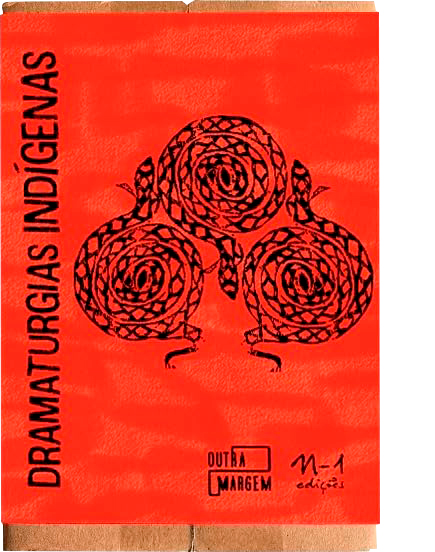
Box Set of Indigenous Plays: “
” Authors: Various. Edited by Trudruá Dorrico and Luna Rosa Recaldes
Publisher: n-1 edições
Year: 2023